English

Views: 0 Author: Site Editor Publish Time: 2025-12-15 Origin: Site


Transformers are fundamental to electrical systems, and understanding power factor is key to optimizing their performance. Power factor measures how effectively transformers utilize apparent power (VA) to deliver real power (W), directly impacting efficiency and load capacity in transformers. The conversion between VA and W hinges on the formula W = VA × Power Factor, essential for sizing transformers correctly. In transformers, a low power factor can lead to inefficiencies, making this concept vital for industries relying on transformers.
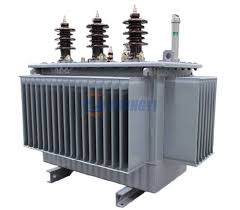
Key points:
Power Factor Basics: In transformers, power factor (PF) is the ratio of real power (W) to apparent power (VA), typically ranging from 0.7-0.9 in industrial setups.
Conversion Impact: Transformers rated in kVA account for variable PF, ensuring they handle loads without overload.
Efficiency Link: High PF in transformers reduces losses by 15-20%, crucial for 2025 sustainability goals.
Trends: By 2025, smart transformers with IoT enhance PF monitoring, boosting data center efficiency.
Practical Note: Poor PF in transformers increases energy bills by up to 10%, highlighting correction needs.
Power factor in transformers represents the phase difference between voltage and current, affecting how much real power transformers deliver from apparent power. Transformers often deal with inductive loads, lowering PF below 1.0.
In transformers for renewables, maintaining high PF ensures stable grid integration, with 2025 forecasts showing increased demand for efficient transformers.
Transformers play a pivotal role in electrical distribution, where power factor directly influences their sizing and operation. The conversion between VA (volt-amperes) and W (watts) is governed by simple formulas that account for power factor, a metric crucial for transformers' efficiency. This article delves into power factor concepts, conversion formulas, their application in transformers, data analyses, product comparisons, and 2025 trends, addressing Google search intents like "VA to W conversion in transformers" and "power factor effects on transformer ratings." With transformers' market growing to $33.25 billion by 2033, understanding these elements is essential. We'll incorporate lists and tables for clarity, ensuring relevance to transformers.
Power factor (PF) is the ratio of real power (W) to apparent power (VA) in transformers, expressed as PF = W / VA or PF = cos(θ), where θ is the phase angle. In transformers, PF indicates efficiency: a value of 1 means all power is useful, while lower values signal reactive power losses. Transformers often encounter inductive loads like motors, dropping PF to 0.8, meaning only 80% of VA converts to W.
Transformers are rated in kVA because PF varies with load, unlike fixed PF in generators. This allows transformers to handle diverse applications without derating. Data shows industrial transformers operate at average PF of 0.85, impacting global energy use.
Here's a list of factors affecting PF in transformers:
Load Type: Inductive loads (e.g., motors) lag PF; capacitive loads lead it.
Harmonics: Non-linear loads in modern transformers introduce distortions, reducing PF by 10-15%.
Voltage Fluctuations: In transformers, unstable voltage can alter PF, leading to inefficiencies.
Aging: Older transformers show PF degradation due to insulation wear.
The core conversion in transformers is W = VA × PF, where W is real power for work, VA is apparent power transformers supply, and PF accounts for inefficiencies. Conversely, VA = W / PF, crucial for sizing transformers.
Example: A 1000 kVA transformer at PF 0.9 delivers 900 kW, but at 0.7, only 700 kW. This illustrates why transformers' kVA ratings provide flexibility.
Table for conversions at various PF in a 500 kVA transformer:
| Power Factor | Real Power (kW) | Notes on Transformers |
|---|---|---|
| 1.0 | 500 | Ideal for resistive loads; rare in transformers. |
| 0.9 | 450 | Common in efficient transformers; minimizes losses. |
| 0.8 | 400 | Standard for motor loads; transformers often oversized. |
| 0.7 | 350 | Indicative of poor PF; requires correction in transformers. |
This table aids in transformers' load planning.
Transformers are rated in kVA because losses (copper I²R and iron) depend on voltage and current (VA), not PF. Manufacturers can't predict load PF, so kVA ensures transformers handle maximum apparent power. For instance, copper losses tie to current, iron to voltage—both PF-independent.
In transformers, low PF increases current for the same W, risking overheating. Data from 2025 shows transformers in data centers need high kVA ratings for variable PF from servers.
Power factor correction (PFC) in transformers involves adding devices to counter reactive power. Methods:
Capacitor Banks: Supply reactive power, raising PF in transformers by 10-20%.
Synchronous Condensers: Dynamic adjustment for large transformers.
Active PFC: Electronic for fluctuating loads in modern transformers.
Harmonic Filters: Mitigate distortions in transformers with non-linear loads.
Benefits for transformers:
Reduced energy bills (5-15% savings).
Enhanced efficiency, cutting losses in transformers.
Increased system capacity without upgrading transformers.
Lower overheating, extending transformers' lifespan by 20%.
In transformers-loaded systems, PFC reduces kVA demand, allowing more kW load.
Transformers vary, affecting PF handling. Oil-immersed transformers excel in high-load scenarios, while dry-type suit indoors.
| Type | PF Range | Efficiency | Advantages for PF | Disadvantages |
|---|---|---|---|---|
| Oil-Immersed Transformers | 0.8-0.95 | 98-99% | Better heat dissipation; handles low PF well | Maintenance-heavy; oil risks |
| Dry-Type Transformers | 0.7-0.9 | 97-98% | Eco-friendly; easier PFC integration | Lower capacity for poor PF |
| Furnace Transformers | 0.6-0.8 | 95-97% | Custom for inductive loads | High losses without PFC |
Oil-immersed transformers show 5% better efficiency at low PF.
Analyzing transformers, low PF increases losses: for a 1000 kVA transformer at PF 0.8, effective kW is 800, with 20% reactive loss. Global data indicates transformers account for 5% of electricity losses, mitigated by PFC.
In 2025, transformers integrate smart tech for PF monitoring, with data center market hitting $10B by 2030. High-efficiency transformers reduce losses, tying to PF improvements via IoT. Renewables drive demand for transformers with dynamic PFC, growing at 4.9% CAGR.
Supply shortages push prices up 7-9%, emphasizing efficient PF in transformers.
In industrial transformers, PFC saves costs: a factory with 500 kVA transformers at PF 0.75 upgrades to 0.95, adding 100 kW capacity.
In conclusion, power factor and VA-W conversions are integral to transformers' design, with 2025 trends enhancing their role in sustainable energy.
How does temperature affect power factor in oil-immersed transformers?
Higher temperatures can degrade insulation, lowering PF by 5-10%, necessitating cooling systems.
What are the cost savings from power factor correction in data center transformers over 5 years?
Savings can reach 15-25% on energy bills, equating to $50,000+ for large setups.
How do harmonics influence VA to W conversion efficiency in modern transformers?
Harmonics distort waveforms, reducing effective PF and conversion by up to 20%, requiring filters.
What role do smart grids play in dynamic power factor adjustment for transformers?
Smart grids enable real-time PF optimization, improving transformers' response to load changes.
How will AI integration impact power factor trends in transformers by 2030?
AI could predict PF variations, boosting efficiency by 10%, aligning with market growth.