English

Views: 0 Author: Site Editor Publish Time: 2025-12-29 Origin: Site


Transformers are fundamental components in electrical engineering and power systems around the world. Whether in large industrial applications, commercial infrastructures, or residential circuits, transformers ensure electrical energy can be safely and efficiently transferred, stepped up, or stepped down according to need. However, one of the most common questions for engineers, technicians, and consumers alike is: Can 50Hz and 60Hz transformers be interchangeable? This question dives into the heart of electrical frequency compatibility and the practical implications for transformers designed at different mains frequencies.
In this in‑depth article, we will explore how 50Hz and 60Hz transformers differ, whether they can be used interchangeably, what design and safety considerations apply, and what real‑world data and trends mean for electrical equipment worldwide.
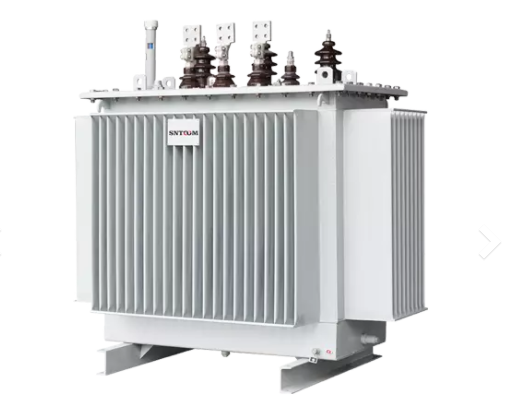
A transformer is an electrical device that transfers alternating current (AC) power between two or more circuits through electromagnetic induction. The key aspect of a transformer’s operation is that it does not alter frequency—rather, it changes voltage and current levels based on its design and turns ratio. Transformers are therefore highly dependent on the frequency of the AC supply they are connected to; frequency directly impacts core design, magnetizing current, impedance, and overall performance.
In global power systems, two mains frequencies dominate:
50Hz frequency is used in most of the world, including Europe, Asia, Africa, and much of South America.
60Hz frequency is standard in North America and parts of Asia.
These designations are important because the expected operating frequency directly influences transformer design parameters.
When transformers are designed, engineers carefully tune the core size, number of turns in the windings, insulation, and other parameters to match a specific frequency. The fundamental relationship among voltage, frequency, and magnetic flux is described by:
E = 4.44 × f × N × A × B
Where:
E = induced voltage
f = frequency
N = number of turns
A = core cross‑sectional area
B = flux density
This equation shows that frequency (f) has a direct impact on transformer design—if frequency changes, the magnetic conditions inside the transformer also change.
Yes, but with limitations.
In general:
Generally safe to operate because the magnetic flux is reduced at 60Hz, leading to lower magnetizing current and less core saturation.
This can result in lower core losses and cooler operation because the transformer was designed for a lower frequency.
Transformers running at a higher frequency can often be more efficient due to reduced magnetizing currents and smaller core losses.
Practical Outcome: A 50Hz transformer can work on 60Hz, especially at the same voltage, and may show acceptable performance. However, there may still be slight changes in efficiency and impedance.
Not recommended without derating because lower frequency increases magnetic flux in the core, which may lead to saturation, overheating, and insulation stress.
Some transformer manufacturers explicitly warn that 60Hz‑only transformers should not be placed on 50Hz systems.
Derating typically involves reducing the applied voltage by around 17–20% to keep the transformer within its safe flux limits at lower frequency.
Practical Outcome: A 60Hz transformer may work at 50Hz if voltage is reduced appropriately and the transformer is conservatively designed, but most standard designs are not suitable for this without adjustment.
To better understand how these transformers differ, the following table provides a high‑level comparison:
| Feature / Property | 50Hz Transformers | 60Hz Transformers | Notes |
|---|---|---|---|
| Core Design | Larger core required to avoid saturation at lower frequency | Smaller core due to higher frequency | Larger core increases cost and weight |
| Flux Density | Designed for higher flux per cycle | Lower flux per cycle | Lower flux reduces core saturation risk at higher frequency |
| Efficiency at Mains Frequency | Good at 50Hz, slightly cooler | Optimal at 60Hz | Depends on load and design |
| Operation at Opposite Frequency | Usually safe at 60Hz | Risky at 50Hz without derating | See articles above |
| Physical Size | Larger core & windings | More compact structure | Smaller size at higher f |
| Core Losses | Generally lower at 50Hz | Higher at 60Hz | Core loss ∝ frequency |
| Application Compatibility | Most of the world | North America and parts of Asia | Frequency standards vary by region |
If a transformer is operated at a lower frequency than it was designed for (e.g., 60Hz transformer on 50Hz supply), magnetic flux increases because frequency is lower, and core can saturate quickly, leading to overheating and potential failure.
Operating a transformer at a different frequency changes the impedance, which affects voltage regulation and voltage drops under load. A 50Hz transformer at 60Hz typically sees higher impedance.
At lower frequency, internal heating can increase due to higher magnetizing current and core flux, which can stress insulation and shorten transformer lifespan if not addressed.
While transformers change voltage and current levels, they do not change the frequency—frequency converters are needed to modify mains frequency.
There are practical instances where transformer frequency differences might be acceptable or mitigated:
Some transformers are explicitly designed and rated for both 50Hz and 60Hz operation. These are often used in export, military, or industrial applications where frequency flexibility is required.
In systems where a transformer must operate with different frequency sources (e.g., in aircraft or offshore installations), frequency converters are used to produce the correct AC frequency before stepping voltage up or down.
For 60Hz transformers on 50Hz supply, voltage may need to be derated by around 17–20% to avoid core saturation and overheating.
Always match the transformer’s frequency rating with the grid frequency unless the transformer is dual‑rated.
If mismatch is unavoidable, consider voltage derating and consult manufacturer guidelines.
Inspect transformer nameplates for frequency rating before replacement or relocation across regions.
Never assume a transformer designed for 60Hz will safely operate on 50Hz without derating or proper assessment.
Frequency conversion issues are typically beyond simple transformers. For household appliances, dedicated frequency converters or universal power supplies may be necessary to ensure proper operation.
To put this into perspective with practical numbers, consider typical mains frequency standards:
50Hz supply: Standard in Europe, India, China, most of Africa and Asia.
60Hz supply: Standard in the U.S., Canada, parts of Japan and South America.
If a transformer rated for 60Hz is used at 50Hz at the same rated voltage, core flux will increase approximately 17–20%, increasing the risk of saturation and overheating. Conversely, a transformer rated for 50Hz when operated at 60Hz sees decreased flux and generally runs cooler with less risk of saturation.
With globalization of electrical equipment, manufacturers increasingly produce transformers rated for both 50Hz and 60Hz to reduce inventory complexity and satisfy international standards.
Modern transformers often include sensors and intelligent monitoring systems that detect frequency drift, overheating, or excessive magnetizing current, helping prevent damage due to incorrect frequency use.
Emerging technologies, including power electronics interfaces like solid‑state transformers and universal frequency converters, help separate voltage transformation and frequency conversion, reducing the dependence on mains frequency for transformer performance.
| Question | Short Answer |
|---|---|
| Can a 50Hz transformer operate on 60Hz supply? | Typically yes, generally safe and may even run cooler. |
| Can a 60Hz transformer operate on 50Hz supply? | Usually no without derating and careful assessment. |
| Is frequency conversion possible with a transformer alone? | No—transformers do not change frequency. |
| Can dual‑rated transformers operate on both frequencies? | Yes—designed for flexibility. |
In conclusion, while 50Hz transformers and 60Hz transformers may sometimes be used across different frequencies under specific conditions, interchangeability is not guaranteed without careful consideration of design, safety, and efficiency impacts. Matching the transformer frequency rating with the power system frequency remains the safest and most reliable approach.
What happens if I use a 60Hz transformer on a 50Hz system without adjustment?
Operating a 60Hz transformer on 50Hz without derating can cause core saturation, overheating, and reduced performance.
How does frequency affect transformer iron core size?
Lower frequency (50Hz) requires a larger core to prevent saturation, while higher frequency (60Hz) allows for smaller cores.
Do transformers change electrical frequency?
No—transformers change voltage and current but do not convert frequency.
Can dual‑rated 50Hz and 60Hz transformers improve compatibility globally?
Yes—dual‑rated transformers are designed for both frequency standards and reduce the need for frequency‑specific models.
What safety practices should be used when selecting transformers for different frequency grids?
Always verify the transformer frequency rating, consult manufacturer derating guidelines, and use proper protective devices to avoid overheating and insulation failure.