English

Views: 0 Author: Site Editor Publish Time: 2026-07-19 Origin: Site


Selecting an industrial power unit is not just a standard electrical necessity. It represents a critical risk-management decision for your entire facility. Unexpected downtime easily costs thousands of dollars every single minute. Inefficient power networks drain operational budgets rapidly. Furthermore, severe safety hazards actively put your workforce at extreme risk. Standard commercial specifications often fail in complex settings. You will find these demanding environments anywhere from dusty manufacturing floors to heavy mining operations. These harsh realities demand rugged, highly precise equipment. This guide gives you a structured framework for evaluating capacity, insulation types, and environmental constraints. You will also learn about mandatory compliance factors and supply chain realities. Following these steps ensures a highly reliable equipment deployment. We aim to protect your daily operations and keep vital systems running smoothly.
Calculating correct capacity stands as your vital first step. Proper transformer selection prevents costly overloads. You must define your exact kVA needs accurately. We evaluate both continuous operating loads and transient peak demands. Differentiating between continuous loads and transient spikes is crucial. Motor startup inrush currents draw significantly more power than normal baseline operations.
Follow these specific steps to assess your capacity requirements:
We strongly recommend applying an industry-standard capacity margin. You should add 20 to 25 percent above your current maximum load. This foresight accommodates future facility expansion easily. It actively prevents premature equipment obsolescence. If you size a unit exactly to current needs, you risk chronic overheating.
Modern industrial facilities rely heavily on Variable Frequency Drives (VFDs). Plant automation systems also introduce complex harmonic distortions. Non-linear loads generate excessive, damaging heat inside standard windings. You need a K-factor rated unit to handle these harmonics safely. A K-rated design utilizes specialized winding techniques and thicker conductors. They mitigate internal heat buildup effectively. Standard environments often use K-4 ratings, while heavily automated plants require K-13 ratings.
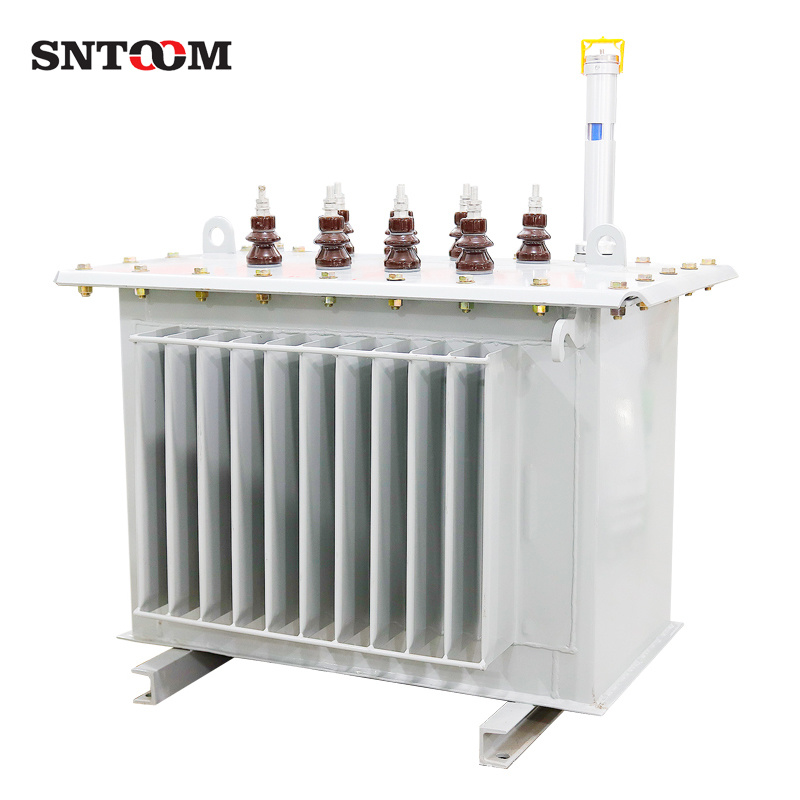
Choosing the proper industrial transformer type dictates your entire site layout. You must evaluate both liquid-filled and dry-type models carefully. Each insulation technology serves distinct operational environments.
Liquid-filled units utilize mineral oil, silicone, or natural ester fluids. They offer superior heat dissipation and exceptionally high electrical efficiency. These models require a smaller physical footprint per kVA. However, they carry specific implementation risks. You must install secondary containment protocols for potential leaks. Mineral oil models introduce higher fire risks. Therefore, engineers primarily install them in outdoor substations. You can minimize fire hazards by choosing high-fire-point ester fluids instead. Esters also offer better environmental biodegradability.
Dry-type units utilize cast resin or Vacuum Pressure Impregnation (VPI) technologies. They present minimal fire hazards and zero fluid leakage risks. This makes them ideal for indoor facility distribution networks. You frequently find them inside commercial basements and manufacturing floors. On the downside, they require a larger physical footprint. They possess lower thermal overload capacities compared to liquid-filled counterparts. Environmental contaminants easily damage them unless they sit inside tightly sealed enclosures.
Use the chart below to guide your initial technology shortlisting process.
| Attribute | Liquid-Filled Units | Dry-Type Units |
|---|---|---|
| Primary Installation Location | Outdoor Substations | Indoor Facilities |
| Cooling Efficiency | Excellent | Moderate |
| Fire Risk Level | High (Mineral Oil) / Low (Esters) | Very Low |
| Maintenance Requirements | Routine Fluid Testing | Periodic Vacuuming / Dusting |
| Overload Tolerance | High | Limited |
An effective power distribution transformer must survive its surrounding environment. Environmental constraints dictate hard limits on your equipment specifications. Failing to account for local weather or air quality guarantees premature failure.
We map specific industrial environments directly to standard NEMA enclosure ratings. Dusty manufacturing floors require robust ambient particle protection. Corrosive chemical plants demand specialized shielding and custom paint. Coastal facilities face constant salt spray degradation.
Facility managers often overlook the physical implementation reality. A unit might meet every electrical specification perfectly. Yet, it could fail to fit through standard facility access doors. Rigging crews struggle maneuvering heavy equipment around tight hallway corners. Furthermore, heavy units often exceed existing concrete pad weight limits. You must verify spatial dimensions and structural loading limits before ordering. Always confirm the unit features clear center-of-gravity markers for crane operators.
Standard electrical equipment assumes routine operation below 3,300 feet (1,000 meters). High altitudes thin the surrounding atmospheric air significantly. Thinner air dissipates internal component heat poorly. Transformers operating above standard altitudes require custom derating calculations. Extreme ambient temperatures also cause chronic internal overheating. You must oversize the unit to compensate for lost cooling efficiency. Ignoring these derating formulas degrades internal insulation systems rapidly.
| Operating Altitude Limit | Cooling Capacity Reduction | Required Capacity Multiplier |
|---|---|---|
| 3,300 ft (1,000m) | 0% | 1.00 |
| 6,600 ft (2,000m) | 10% | 1.10 |
| 9,900 ft (3,000m) | 20% | 1.20 |
Sometimes, a standard off-the-shelf Transformer introduces unacceptable operational risk. Edge-case scenarios demand customized engineering solutions to maintain safety. Standard commercial specifications cannot survive specific heavy industrial processes.
Heavy mining operations subject electrical equipment to severe, continuous physical vibration. Standard core assemblies shake apart under these brutal conditions. Rectifier applications and arc furnaces require complex phase-shifting designs. We specify custom internal bracing and unique coil windings for these extremes. Robust heavy-duty construction prevents mechanical failure during intense operations.
Localized grid power often fluctuates wildly in remote industrial zones. Custom tap configurations allow technicians to adjust output voltages manually. This ensures stable power delivery to sensitive automation equipment. Furthermore, specific impedance matching limits catastrophic fault currents effectively. By engineering the exact impedance percentage, you protect downstream switchgear. This prevents explosive short-circuit events from destroying localized electrical panels.
Modern critical infrastructure integrates directly into smart grid ecosystems. Advanced monitoring sensors provide vital predictive maintenance data continuously. Dissolved gas analysis sensors track internal oil degradation in real-time. Thermal monitors identify dangerous winding hot spots before catastrophic failure occurs. These digital additions prevent unexpected site-wide power losses. Smart sensors allow maintenance teams to schedule planned outages safely.
Navigating modern procurement requires strict adherence to industry regulations. You must evaluate mandatory safety frameworks carefully. Local inspectors rely on these specific standards during site commissioning.
Engineers evaluate system compliance across several independent dimensions. Missing a single certification stalls installation schedules indefinitely.
Failing to meet these baseline standards results in failed site inspections. Code violations force costly onsite modifications and delay facility openings.
Current market procurement challenges complicate aggressive project schedules. Custom-built equipment often requires lead times extending beyond fifty weeks. You must evaluate project urgency against available equipment alternatives. Sometimes, a high-quality refurbished unit provides an immediate stopgap solution. Certified rewound models bridge urgent supply chain gaps effectively. However, net-new custom builds offer the longest predictable operational lifespan. Engage procurement teams early to secure production slots.
Successful equipment selection balances strict electrical loads against harsh environmental limits. You must navigate physical dimensions, cooling constraints, and regulatory frameworks simultaneously. Overlooking a single environmental variable compromises your entire electrical distribution network. Protect your capital investment by validating every technical assumption thoroughly.
Take these immediate action steps to secure your power infrastructure:
Do not guess on critical electrical infrastructure specifications. We prompt you to consult specialized technical engineering teams today. Request a customized sizing review tailored exactly for your unique facility requirements.
A: First, multiply the voltage by the total required amperage. Next, multiply this result by 1.732. Finally, divide that number by 1000. This formula gives you the precise base kVA rating. You must then add a 20 to 25 percent safety margin. This margin accommodates future expansion safely and prevents dangerous thermal overloading.
A: Standard indoor units usually fail outdoors. Their standard NEMA 1 enclosures cannot stop rain, snow, or heavy airborne dust. Moisture destroys internal cast resin insulation very quickly. If you must place a dry-type unit outside, you need a specialized NEMA 3R or NEMA 4X weather-resistant enclosure to guarantee survival.
A: A well-maintained unit generally lasts 20 to 30 years. Liquid-filled models occasionally operate smoothly for 40 years. Extreme ambient heat, chronic electrical overloading, and poor structural ventilation severely degrade this lifespan. Routine oil testing and proactive thermal inspections help operators maximize operational longevity and avoid early replacement.
A: Impedance directly restricts downstream short-circuit fault currents. A higher impedance percentage actively lowers peak fault current levels. This protects downstream electrical panels from catastrophic explosion damage. However, higher impedance also causes larger voltage drops under heavy load. You must balance these two competing factors carefully during the engineering phase.